

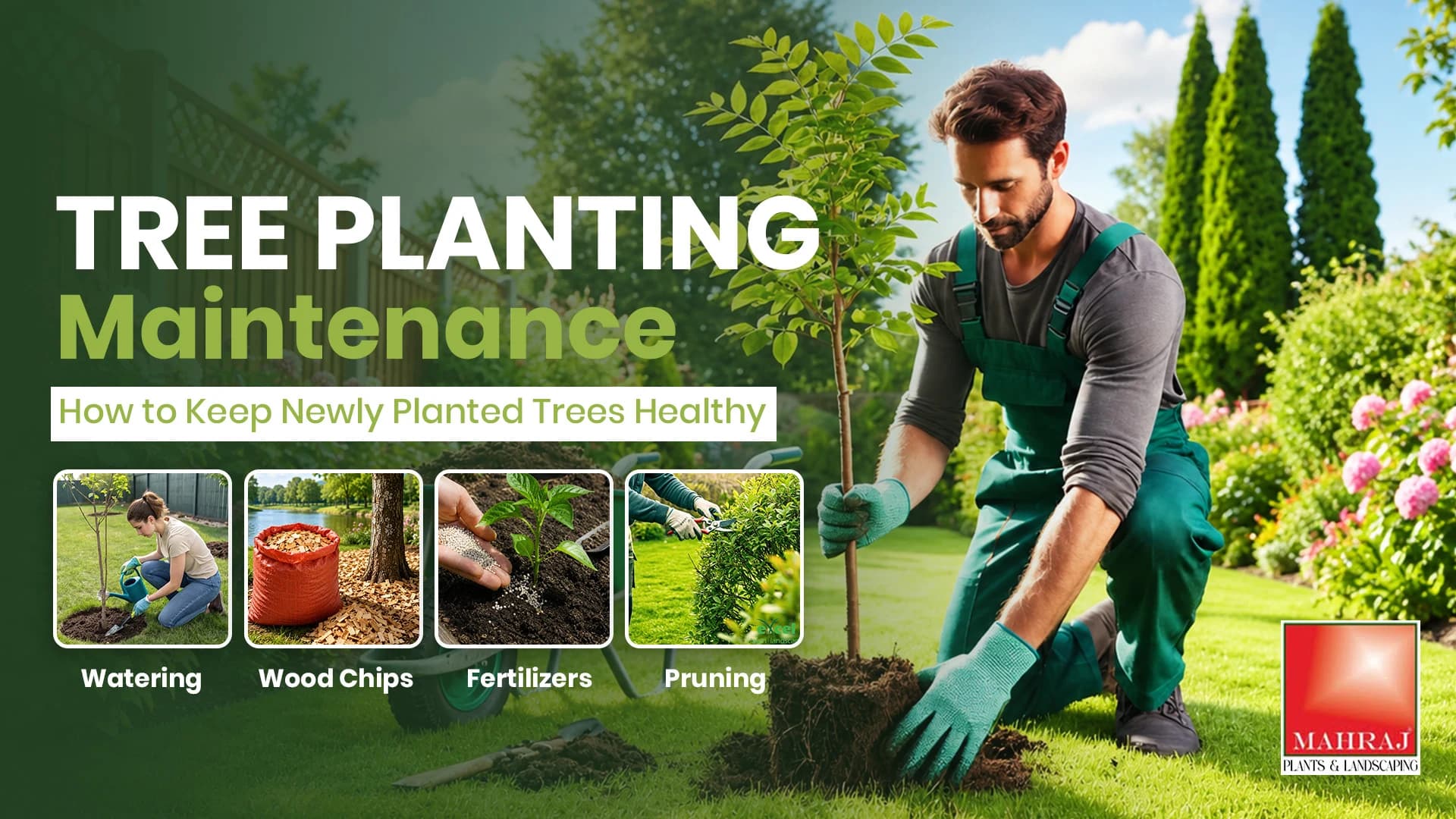
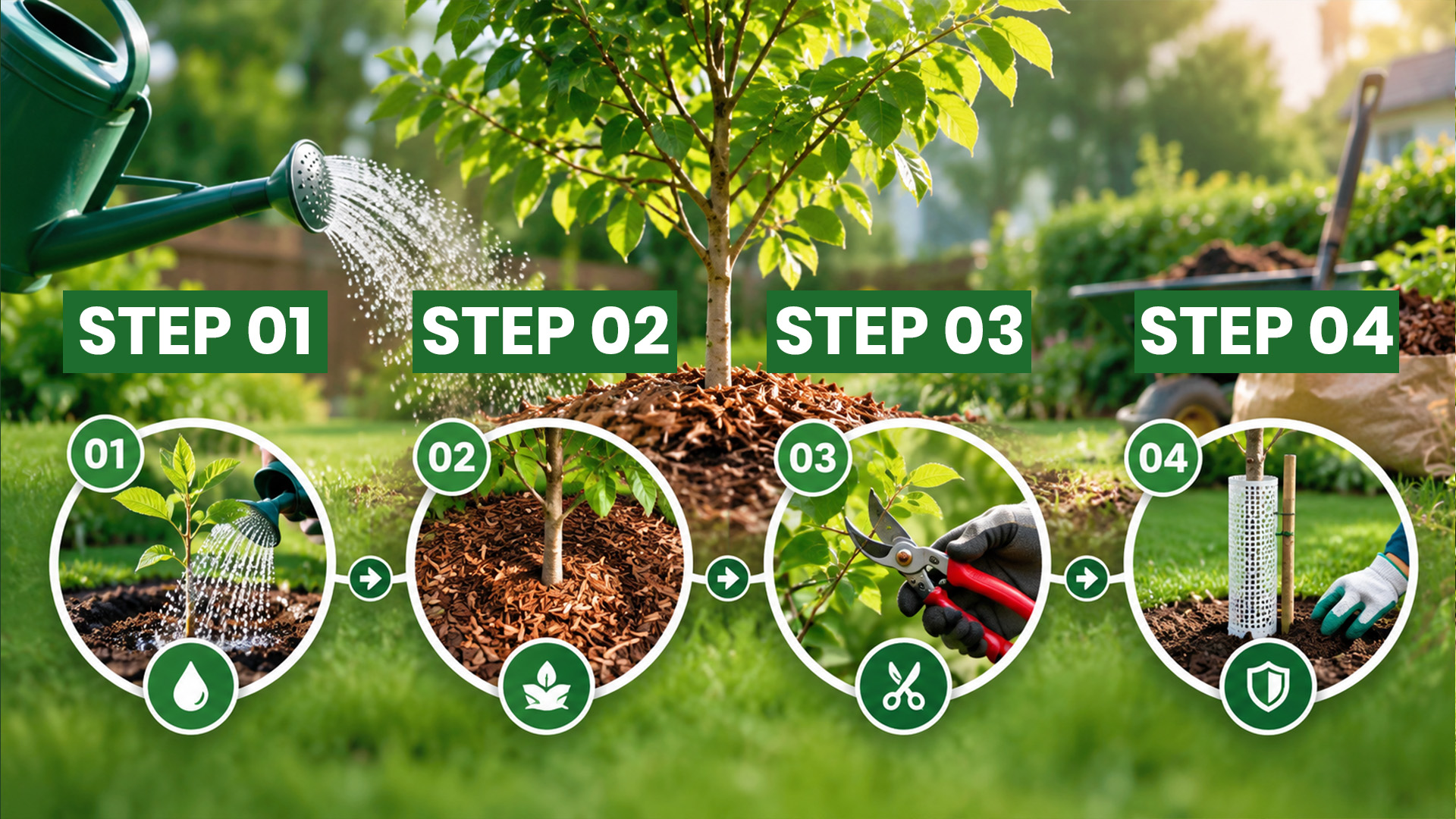
Give it water on a steady schedule. Add a layer of mulch so the ground stays damp. Watch the weather and shield the tree when it gets very hot or very rough.
You might see healthy leaves, yet the roots may still be settling in. Keep up with the tree planting maintenance steps and take time to look it over often. If you stay with it, the young tree can become tougher and handle heat, wind, and other stressful days.
Key Takeaways
Check soil before watering.
Add mulch to keep roots protected.
Limit pruning during transplant recovery.
Protect young trunks from damage.
Watch for pests, disease, and stress.
Seek professional care when needed.
Why the First Years Need Extra Care
Newly planted trees usually take the hardest care in their first years. During that time, the roots are still spreading out past the old root ball. Because of this, the tree can struggle more with dry spells, hot weather, wet soil that does not drain well, and kicks or bumps from people or equipment.
In the first year, you should watch the tree more often than later. If you keep up good care during years two and three, the tree tends to build a steadier root system on its own.
Watering Tips for Better Tree Planting Maintenance
When you water a brand new tree, it helps the roots calm in the ground. If the watering is off, either too low or too high, the tree may start to feel unwell. Pour the water in slowly so it has time to sink right down toward the roots. Try not to leave the soil wet all the time.
How Often to Water
Do not use one fixed routine for every tree. Look at the soil first. Also think about the tree’s size, the weather, and the season. When it is hot, dry, or windy, young trees often need more water. The right routine can also help you understand your tree plant maintenance cost, especially when planning regular watering and seasonal care.
Best Watering Methods
Soaker hoses
Apply water slowly and evenly across the tree’s root zone.
Watering bags
Release water gradually and can be useful where regular manual watering is difficult.
Slow hose flow
A hose set to low flow can provide controlled irrigation. Move it around the root zone rather than concentrating water in one spot.
Avoid strong water pressure directly against the trunk.
Signs of Overwatering and Underwatering During Tree Planting Maintenance
Both conditions can cause visible stress.
Signs of underwatering include:
Wilting leaves
Dry or curling foliage
Leaf scorch
Premature leaf drop
Dry, cracked soil
Slow or limited growth
Signs of overwatering include:
Constantly wet soil
Yellowing leaves
Poor growth
Soft or declining roots
Fungal or root-related problems
Water pooling around the tree
Start by looking at the root zone first. If the soil is already wet, adding more water may make things worse for the tree.
Mulching Around Young Trees
It helps shield the area around the roots. It also keeps the soil from changing too fast. Spread a layer near the tree, but do not put it over the trunk during your tree planting maintenance process
Benefits of Mulch
Proper mulch can:
Reduce moisture loss
Moderate soil temperature
Suppress weeds and grass
Reduce soil compaction
Protect shallow roots
Add organic matter as it breaks down
You can also find different tree care products that support watering, mulching, trunk protection, and other routine maintenance needs.
Correct Depth and Ring Size
A frequent problem is volcano mulching. In this setup, people pile mulch up high right against the tree trunk.
When that happens, moisture can sit against the bark. Over time, rot becomes more likely. Bugs may also find a place to hide. The trunk may not grow the way it should.
Other mistakes include:
Applying mulch too deeply
Covering the trunk flare
Using compacted mulch
Creating a very small mulch ring
Let mulch sit and get too wet.
A good mulching is about covering the soil. It should not cover the tree.
Staking and Trunk Protection
Some young trees do not need support at planting. If you tie them down too much or too early, the trunk may not move like it should. That can slow normal growth and leave the tree less strong later on.
Does Your Tree Really Need Staking?
Temporary staking may help when a tree has:
An unstable root ball
A tall or flexible trunk
A large canopy
Strong wind exposure
Unstable soil conditions
Trees with stable root balls in sheltered locations may not need stakes.
When to Stake and Remove Supports
Support the young tree without stopping its natural movement. Use flexible ties that keep it steady while allowing the trunk to sway. Check the ties often. Look for areas where they rub or start to tighten around the bark. Take the stakes away when the tree can stand on its own and stays upright without help.
Protecting Trees from Pests and Animals
Preventing physical damage early can help young trees establish properly. Trunk guards can protect against animals and lawn equipment when used correctly. Make sure the guard is not too tight and inspect it regularly. Adjust or remove it as the tree increases in size.
Pruning Newly Planted Trees
Do not cut back the branches right after you plant the tree. Keep the leaves on for now. They help the tree make food through photosynthesis. This also lets it recover while the roots settle in.
Why You Should Prune Lightly at First
Cutting back too much of the healthy growth can hurt how the tree makes energy. It can also make it harder for the tree to bounce back after being moved.
The first pruning should deal with clear issues. It should not try to remake the whole tree right away.
What to Remove
Remove branches that are:
Dead
Broken
Diseased
Severely damaged
Rubbing or crossing
Creating an immediate safety concern
Avoid removing large amounts of healthy foliage unnecessarily.
When to Start Structural Pruning
After the tree starts settling in, you can slowly thin some branches. This helps open up space between limbs. It also supports a better canopy shape and steadier growth over the years.
In most cases, it is smarter to do small fixes at intervals. Removing too much at once can be risky. Pruning should suit the tree type and local conditions.
Protecting Young Trees from Damage
Inspect young trees regularly for signs of damage or disease.
Common Pests and Diseases in Young Trees
Before applying any treatment, make sure you know what is causing the symptoms. That’s why watch for:
Chewed or distorted leaves
Holes in foliage
Discoloration
Sticky residue
Bark damage
Unusual growths
Fungal growth
Branch dieback
Protecting Against Lawn Equipment Damage
Mowers and string trimmers can strip bark from young trees and cause serious injury.
Maintain a mulch ring around the tree to create a protective buffer, and use a trunk guard where necessary. Never allow a string trimmer to contact the trunk.
Protecting from Heat, Frost, and Wind
Extreme weather can quickly stress a young tree.
When it is hot, check the soil often. Keep the soil from drying out too much. Add mulch that fits the area, and do not let it sit too thick against the trunk.
If you live where frost shows up, be ready. Some trees and shrubs can be harmed by cold snaps. Cover them for a short time if needed.
High winds also cause trouble. They pull more water from leaves and can tip a fresh planting. Planting the tree the right way helps. Stake it for a while if it needs support.
Tree Planting Maintenance Timeline: Year 1 to Year 5
Seasonal care can be managed within this timeline rather than as a separate section.
First Year Care Schedule
Pay particular attention during heat, drought, heavy rainfall, and strong winds. So focus on establishment:
Monitor soil moisture closely
Water deeply when needed
Maintain the mulch ring
Protect the trunk
Check for transplant shock
Inspect for pests and disease
Avoid unnecessary pruning
Check stakes and ties
Years 2-3 Care Schedule
Once roots spread, watering can become less frequent depending on local conditions and tree needs.
So continue to:
Monitor watering needs
Maintain mulch
Inspect tree health
Correct minor structural problems
Remove damaged branches
Monitor pests and diseases
Adjust or remove support systems
Years 3-5 and Beyond
Some species establish more slowly, so the timeline will vary. As the tree becomes established, maintenance can shift toward long term health:
Structural pruning
Canopy development
Soil and root zone care
Pest and disease monitoring
Seasonal inspections
Irrigation during prolonged dry periods
Signs Your New Tree Is Struggling and How to Fix It
Regular inspections help catch problems early. Following a tree plant maintenance guide can also help you identify common signs of stress and respond before small issues become serious.
Warning Signs
One symptom does not always identify the cause, so examine the tree and its growing conditions together.
Watch for:
Drooping leaves may indicate dry soil or root trouble.
Scorched foliage can be caused by heat, drought, or root damage.
Early leaf fall may result from transplant shock or disease.
Yellow leaves can signal moisture or nutrient problems.
Branch dieback may show serious stress or injury.
When to Call a Professional Arborist
Knowing your tree maintenance responsibility can help you decide when basic care is enough and when professional support is needed.
If a tree has major damage, roots showing above the soil, or a strange new tilt, you should get help. A trained arborist can also check for bugs and plant diseases. They can deal with trees that keep getting worse. They also handle trimming jobs when safety is a concern.
Here, Mahraj Landscaping can assist with routine tree and landscape care. They can look over your trees, spot problems early, and recommend simple steps that fit the site. This can support stronger, healthier growth.
Conclusion
The first years after planting matter. Good tree planting maintenance care starts with regular watering, suitable mulch, and timely pruning. These steps help young trees build stronger roots and stay healthy. Checking the tree often can also reveal pests, disease, or signs of stress before they worsen. Consistent care supports better growth, while professional help can simplify maintenance.