

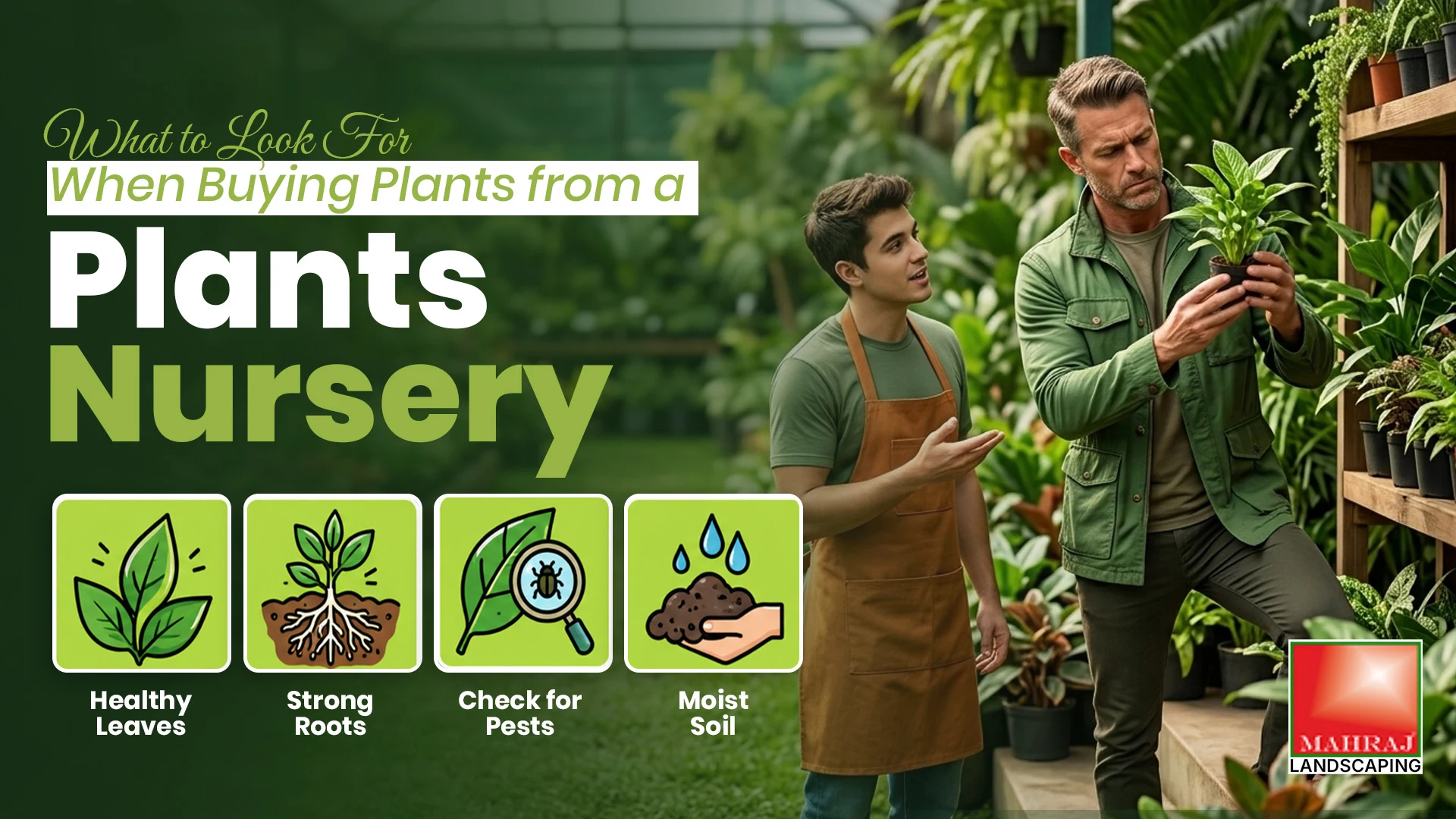
Here are ten fast and easy checks that will assist you in selecting plants that will grow well in your home garden.
If you're searching for a plant nursery near me, compare local options and check plant quality before making a purchase. You can also explore Mahraj Landscaping for plant selection and landscaping solutions.
Key Takeaways
Choose plants with healthy growth and roots.
Check for pest infestations and damage.
Consider sunlight, climate, and available space.
Discuss them with the nursery staff, along with ways to care for them. They'll know how to tell you.
Beware of low prices. This does not necessarily ensure that the best value has been achieved.
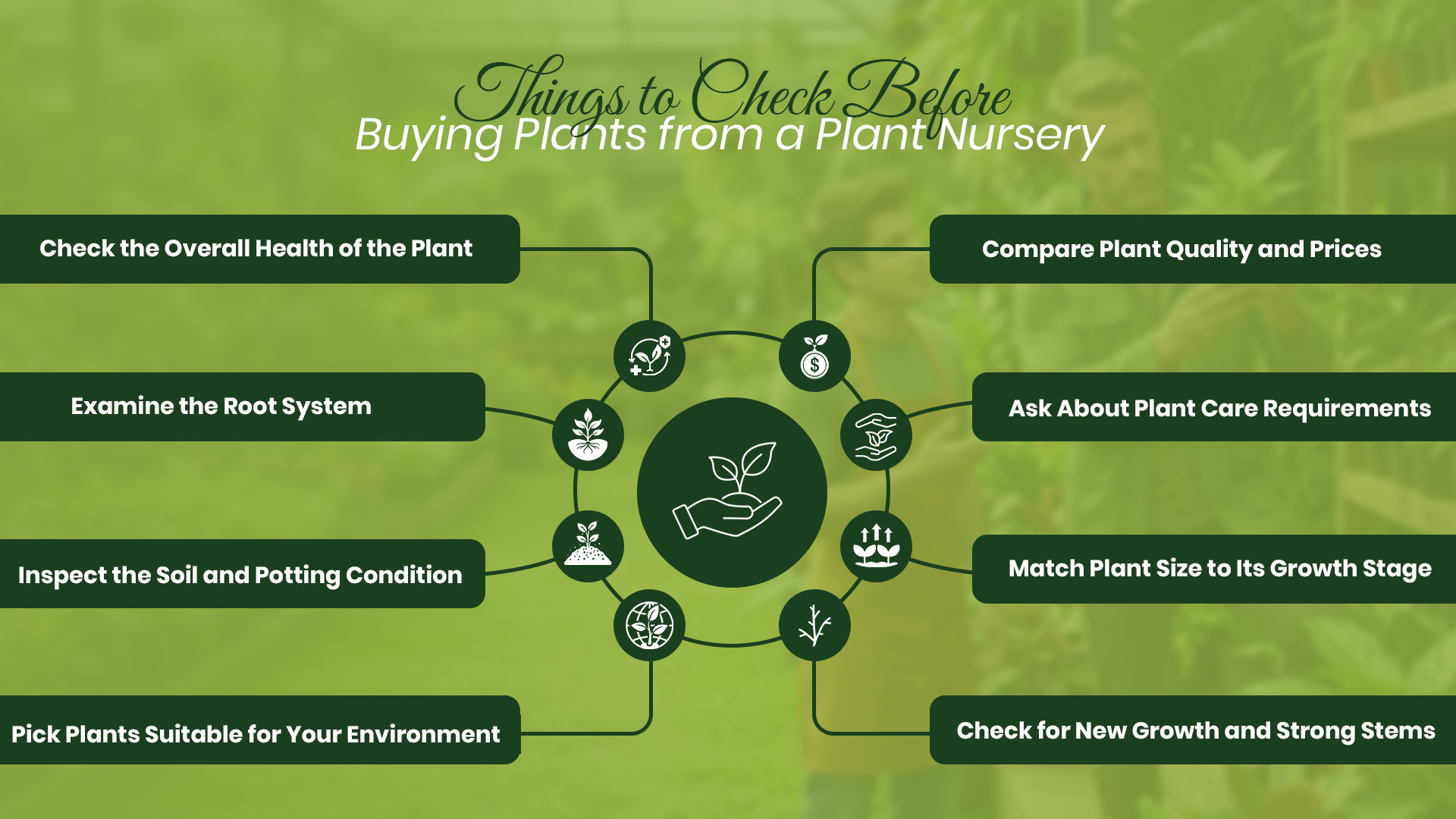
Things to Check Before Buying Plants from a Plant Nursery
Think of buying some plants as you would think about buying any pet. You want a plant that's healthy, thriving, and suited to your home. The following are 10 easy things to check.
1. Check the Overall Health of the Plant
Make a general observation about the whole plant. Does the plant look fresh and healthy? A healthy plant will be upright, even in color and even sided. If it appears tired, droopy or lopsided, think twice.
When comparing options at Williams Plant Nursery or another local supplier, use these signs to assess plant health.
Inspect the Leaves and Stems
Examine leaves for a natural color and health. If signs of yellow, brown tipped or black spotted appear on your plants, there may be a problem.
The stems should be straight, smooth and devoid of bends. If the stems are soft, mushy or wrinkled, then it may be a problem.
Be Alert for Signs of Pests and Diseases
Be sure to examine both sides of leaves, as pests may be found under the leaves.
Check stems for bugs, white growth, sticky patches, and brown bumps.
Try to find leaf spots that are big, dark and powdery.
2. Examine the Root System
A plant's roots stay out of sight inside the soil. Healthy leaves don't always mean healthy roots. When buying plant nursery trees, inspect the root system to help ensure successful growth after planting.
Check Root Color and Condition
If the nursery allows, gently slide the plant out of its pot. Great roots will be stiff, light tan or white in colour. If the roots are dark brown or black, feel soft and unpleasant, there is most likely rot.
Avoid Root Bound Plants
Root bound plants have tightly circling roots or roots poking out of drainage holes. Normally, there is some crowding, but an excess of roots in a reduced amount of soil will restrict growth following purchase.
3. Choose Plants Suitable for Your Environment
This lovely plant should be in a nice place to grow. Think about where you'll place your plant before buying it. A Louisville native plant nursery may offer native species that suit the area's climate and growing conditions.
Consider Sunlight and Shade Requirements
Take note of the amount of light available in your balcony, garden and window. Next, choose a plant that is a match. Don't place too much in the sun for shade plants.
Check Temperature and Humidity Needs
Each plant species can be said to have its own comfort zone or temperature. Some prefer cool air, cool humidity and some prefer heat. See if they will be okay in your summers and winters.
4. Inspect the Soil and Potting Condition
Prior to buying a plant, test the soil. Plants should be dark, loose and moist but not overwet or dry. Avoid using pots that have green or white mold with lots of weeds or small flies.
Look for drainage holes in the pot, as well. If not properly drained, excess water can be a cause for root problems. When visiting a Redbud Native Plant Nursery, apply the same checks before selecting your plants.
5. Check for New Growth and Strong Stems
A beautiful sign of the plant's life and activity is when it produces new growth. Look for new growth, good looking buds and new leaves.
Choose plants with strong stems and little leaning. Fully bloomed flowers may wilt sooner, while unopened buds can extend the blooming period indoors.
6. Match Plant Size to Its Growth Stage
Not everything big is good. The bigger the plant, the longer it may require to acclimate and the more the plant may cost. Smaller plants are frequently better able to adapt to growing in a new location.
Also, consider the plant’s mature size. A small shrub today could take over your garden in a few years, so plan ahead.
7. Ask About Plant Care Requirements
Nursery staff handle plants all day, so use their knowledge. Inquire how to care for your plant in the region's climate.
If you're exploring a plant nursery Portland option, for example, check whether the plants suit your specific growing conditions and seasonal weather.
Watering and Fertilizing Needs
Have an understanding of the plant's requirements in terms of watering during the year. Verify what type of fertilizer to use, the rate and when to apply it.
If watering is too much or fertilizer concentrations are too high, this can have a negative effect on the plant.
Pruning and Repotting Requirements
Know how much pruning different plants need, as requirements vary by species. Ask when to prune and when to repot the plant. With this in mind, it's a great way to make sure you don't have any surprises.
8. Check Plant Labels and Variety Information
Plant care steps such as watering, how much light to give, and what to expect for growth will be listed on the plant tag. Check both plant names on the tag to distinguish similar varieties. If unsure, ask nursery staff to verify the identity.
9. Compare Plant Quality and Prices
Research the various charges at the nurseries. The low price is not always a good deal. Because weak rooted or infested plants will be more expensive to cure.
Consider each disease, age of plant and variety prior to making a decision. It may be prudent to pay a little more for a healthy plant.
10. Check Plant Care and Return Policies
A good nursery offers healthy plants and reliable customer support. When a plant is having trouble after purchase, ask about guarantees, replacements or how to take care of the plant.
Remember to always have a receipt with you and know of any possible reason why you may not be able to replace your receipt. Values are clearly communicated, which demonstrates the value of the nursery to their customers.
Conclusion
Getting plants from a plant nursery can feel fun, not like a chore. Take a moment to write labels on the leaves and stems, then on the roots, and also on the soil. Match up the plants to the space, ask questions and take your time.
Bring new plants into the home and monitor for possible problems that can be detected early in the growing season, for a week or 2.
After you have finished this plant checklist, you'll be able to select plants to enjoy in your home and garden.