

Relax! Almost everyone suffers from it. The good news is that a green wall is not all that complicated to maintain. With this easy guide, you’ll get clear instructions to complete the process affordably.
Key Takeaways
Check your green wall regularly for early signs of problems.
Water when needed due to plant requirements, weather and growth.
Regularly inspect irrigation/drainage systems.
Provide appropriate lighting for various plants.
Pruning, fertilization and replacement are required.
Remember to pay attention to the requirements in a seasonal modification of the maintenance program every day.
What Does a Green Wall Need to Stay Healthy?
Think of your green wall as a garden growing vertically. It needs the right balance of:
Water
Light
Nutrients
Airflow
Proper drainage
Regular attention
A green wall garden also needs suitable plants that can grow well in a vertical environment.
If one of these goes missing, your plants will show you. The steps below help you listen to them.
10 Ways to Keep Your Green Wall Healthy
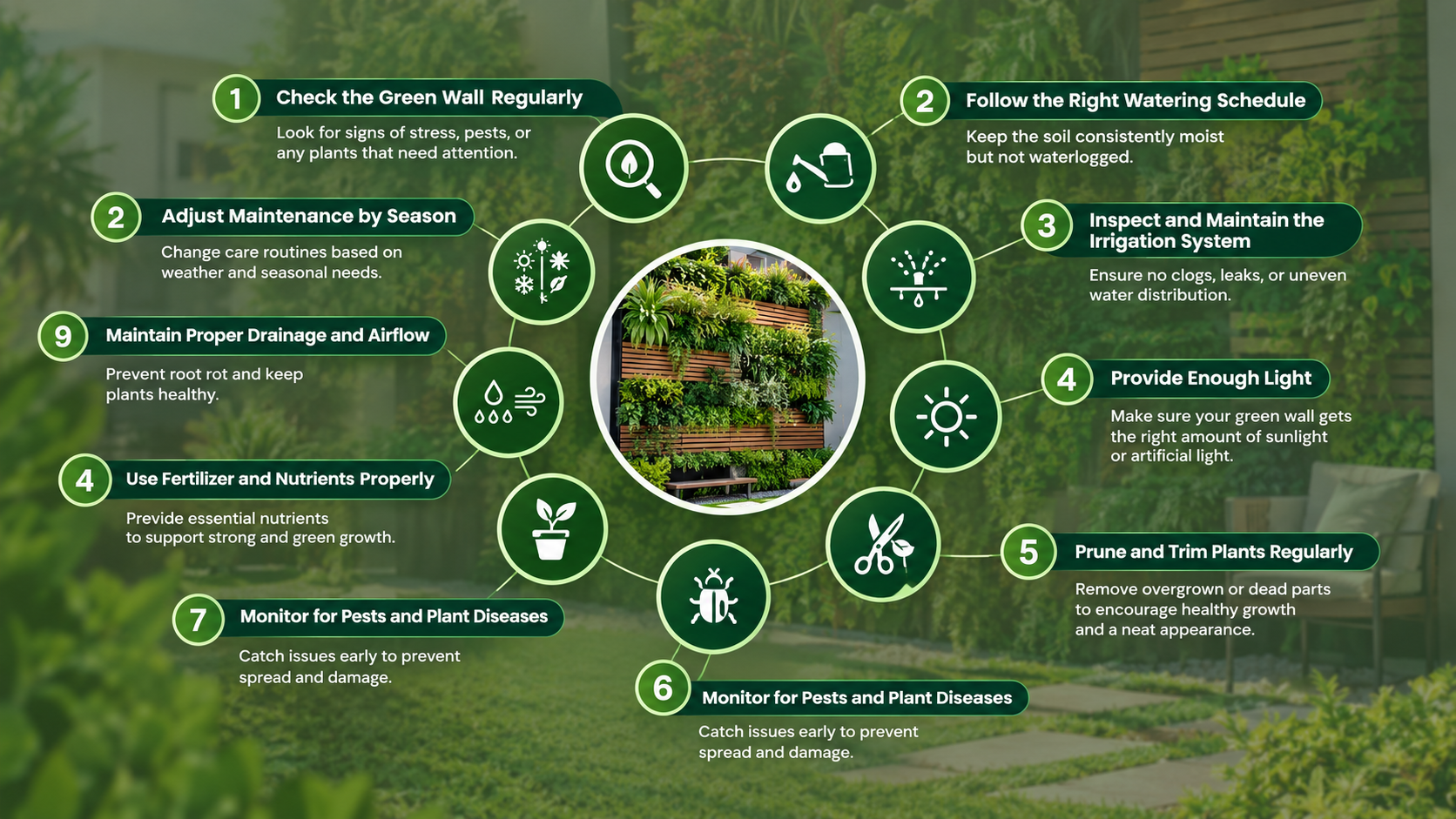
A living wall can look amazing. To keep it that way, you have to check it often. Try these ten small habits. They can help the wall stay healthy through the year.
1. Check the Green Wall Regularly
Check on the living wall often to check its health. Compare to see if any changes have occurred in plants.
Signs of Plant Stress
Watch for:
Drooping or curling leaves
Pale or faded colour
Slow growth
Brown or damaged leaves
Dry or Yellowing Leaves
Lack of water or stress may lead to yellowing or water loss of leaves. Always inspect the growing setup and soil. Avoid changing the treatment without first thoroughly considering those conditions.
2. Follow the Right Watering Schedule
Watering of green walls is necessary. There can be issues with water scarcity or abundance in no time.
How Much Water Green Walls Need
Green walls that are not spaced properly will dry out more quickly. Climate, site and cultivation practices have an impact on the water use by the plants.
When preparing for irrigation, make sure the soil or growing medium does not become too soggy.
Don't Overwater or Underwater Plants
Excessive watering will cause the soil to become saturated, leading to drooping leaves, mould and root issues.
The plants become weak, leaves become crisp and soil becomes dry because of overwatering.
Adjust Watering for Weather and Plant Needs
In cold and wet weather, water requirements will be lower and vice versa for hot and dry weather. Not all individual plants have the same amount of water per acre requirements.
3. Inspect and Maintain the Irrigation System
Typically, watering in a green wall is done by drip irrigation. Walls can dry out, with or without issues and wall blocking.
Check Drip Lines and Emitters
Thoroughly test emitters and lines routinely. Make sure that drier tiles do not remain in the wall. Keep all the surfaces of the walls wet.
Look for Leaks and Blockages
Typically, a leak can be detected by wet patches on the wall or floor.
If flows are low, it will likely be an emitter plugged in the dry zone.
Clean Filters and Irrigation Components
As minerals and dirt build up, the water flow is restricted. Clean the parts, which include filters, the pump, timers and tanks, etc., in the system.
4. Provide Enough Light
There needs to be sufficient light to allow the plant to grow normally. Even proper watering cannot make up for poor lighting.
Indoor Green Wall Lighting
It is a perfect setup against the indoor green wall of houses for growing plants. Use of grow lights might be necessary in areas with poor natural light.
Outdoor Sunlight Requirements
Consider how much sunlight different sections of the outdoor green wall receive. Choose plants that suit those conditions.
Signs of Insufficient Light
Common signs include:
Long, thin stems
Pale or small leaves
Plants leaning toward light
Slow growth
5. Prune and Trim Plants Regularly
Pruning will keep the green wall neat and will provide some headspace to improve the plant's growth.
Remove Dead and Damaged Growth
Using sterile instruments, carefully prune off any dead, broken or damaged leaves. This will help to harden the wall and will minimize the potential problem areas.
Control Overgrown Plants
Fast growing plants can cover neighbouring plants and block their light. Trim them to balance, if needed.
Maintain an Even Appearance
Step back and look at the whole wall after pruning. Small, regular trims help maintain a clean and balanced appearance.
6. Monitor for Pests and Plant Diseases
Tight planting areas can provide an opportunity for pests or disease to be conveyed by plants. When faced with problems, respond and seek pragmatic solutions to address these problems.
Common Signs of Infestation
Look for:
Sticky leaves
Tiny webs
Holes in leaves
White patches
Visible insects
Fungal Problems
They might have a fungal issue if dark spots are seen, if a powdery growth is spotted, or if it's always damp. This can become severe by low airflow and humidity.
Early Pest Control
As soon as possible, remove affected leaves and treat the cause. Repeat with the right plant safe treatment when necessary.
7. Remove Dead and Replace Unhealthy Plants
No matter how much effort you give, sometimes you cannot save a plant. When removed, it will help to prevent the rest of the wall from getting sick and unsightly.
When to Remove a Plant
Take a plant out if it:
Is completely dead
Has a serious disease
Shows no sign of recovery after a few weeks of care
Choosing Suitable Replacement Plants
Select an alternative that will perform the same functions and have similar light, moisture and space requirements as the area where it will be placed.
Preventing Empty Patches
Use plants as replacements to maintain uniformity and fullness of plants if unhealthful. A grass green wall can also work for designs that need a softer, lawn like appearance.
8. Use Fertilizer and Nutrients Properly
Green wall plants are limited in space and may require supplemental nutrients.
When Green Walls Need Feeding
During the growing season, the majority of walls will very happily take in a light liquid feed every few weeks. So, you must reduce, or eliminate winter feeding.
Avoid Overfertilization
More isn't better. If too much fertilizer is applied, white marks will become visible on the roots, which could be burnt at the crown level. Interpret and follow label directions.
Choosing Nutrients Based on Plant Types
Leafy plants: A balanced fertilizer
Flowering plants: A feed with extra potassium
Succulents: Very little, if any
9. Maintain Proper Drainage and Airflow
Plants' roots require water and air. But many of the problems will be avoided by making changes to drainage and ventilation.
Prevent Waterlogging
Make sure excess water can leave the growing system. Constantly wet conditions can damage roots.
Check Drainage Outlets
Wash trays, gutters and drains to get rid of dirt and dust.
Improve Airflow Between Plants
Promote good air movement between plants. This is more of an issue during humid weather.
Prevent Mould and Root Problems
With proper drainage and air circulation, moisture problems, mould problems and root problems can be eliminated.
10. Adjust Maintenance by Season
Your green wall's needs can change throughout the year.
Summer Care
Water more often
Check for sunburnt leaves
Add shade on extremely hot days
Winter Care
Water less
Feed less
Be sure to frost outdoor plants
Beware of dry air from heaters in the house
Changes During Rainy or Dry Periods
Make sure the water drains during wet weather. Checks and monitoring of these dry areas should be stepped up when it is dry.
Green Wall Maintenance Schedule
In any artificial green wall, maintenance is a crucial aspect to maintaining the wall's freshness. This schedule shows what to do daily, weekly, monthly and every season.
| Frequency | Maintenance Tasks |
|---|---|
| Daily/Regular | Visual inspection and signs of stress |
| Weekly | Raising the level of the water, leaves and pests condition |
| Monthly | Inspect the fertilizer, irrigation drainage and irrigation drain lines |
| Seasonal | Don't forget to trim, water and fertilize plants when necessary |
| Yearly | System inspection and plant replacement |
The exact schedule depends on your plants, location, and green wall system.
Common Green Wall Maintenance Mistakes to Avoid
Avoid these common mistakes:
Overwatering plants
Ignoring blocked irrigation lines
Choosing unsuitable plants
Skipping regular pruning
Using too much fertilizer
Delaying pest or disease treatment
Following the same routine throughout the year
Conclusion
Indeed, a successful living wall doesn’t need a lot of upkeep. It should, however, have sufficient water, light, food, ventilation and drainage.
Specifically inspect plants and the system of irrigation, and care for plants. Trim as needed. Take small steps if something is amiss to make proactive steps. For professional green wall care, Mahraj Landscaping can help maintain your wall in good condition.
If properly maintained, the green wall will be fresh, healthy and beautiful at all times. These green wall installation steps can help you keep your living walls healthy in every season.