

A garden can start in even the smallest outdoor space. You can start with a free corner, containers, or a small grass patch. Consider the light, soil, and space. A little preparation can help you select suitable plants and materials and avoid unnecessary work.
Here, we will cover planning, plants, landscaping features, tools, maintenance, mistakes, and low maintenance options for gardening & landscaping.
If you are searching for landscaping near me, start by comparing the services and planning approach offered in your area.
Key Takeaways
Plan your garden from the start.
Select plants based on climate and water availability.
Pair planting areas with suitable landscape features.
Follow regular watering and maintenance.
Apply mulch to retain soil moisture.
Choose low care plants for easier maintenance.
Understanding of Gardening & Landscaping
Gardening and landscaping work together but have different purposes. Understanding them helps you create a realistic garden plan.
Gardening
Gardening involves growing and caring for plants such as flowers, vegetables, herbs, trees, and shrubs. Common tasks include planting, watering, pruning, feeding, and regular upkeep.
Landscaping
Whatever is done outdoors to design and enhance it is part of landscaping. It includes plants and turf, paving, and lighting, such as seating, fencing, a water feature, and a whole lot more.
Some projects require landscape design & build solutions that connect planning with installation.
Difference Between Gardening and Landscaping
Consider gardening as a way of looking after living plants. Landscaping is a wider concept of the whole outdoor area. It can include gardening as well as layout, construction, materials, and space planning.
| Gardening | Landscaping |
|---|---|
| Focuses mainly on plants | Focuses on the complete outdoor space |
| Includes planting and plant care | Includes design, layout, and installation |
| Covers watering, pruning, and feeding | Can include pathways, walls, lighting, and seating |
| Often requires regular hands-on care | Can involve larger planning and construction work |
| Works with flowers, herbs, vegetables, trees, and shrubs | Combines softscape and hardscape elements |
Benefits of Gardening & Landscaping
Good outdoor planning improves more than appearance. It can also add comfort and usability to your home. A good layout can fit the land and the local setting.
1. Improves Garden Appearance
A well planned garden can look better right away. When plants are cared for and lawns stay neat, the whole place feels more pulled together.
Clear planting beds help the eye move through the space. The right hardscape features, like paths or borders, also matter in a house garden landscape.
2. Improves Outdoor Space Usage
Makes the outdoor area work better day to day. Landscaping can help you use the space you already have.
Think about paths, benches or seating, shade spots, and garden plants. Together, they form areas that feel good for daily use and downtime.
3. Can Increase Property Appeal
A well kept garden helps people form a quick opinion. Neat plant beds make the place look cared for. Green plants that are doing well also stand out.
Good fences and clear edges give the yard a good shape. Spaces outside that actually work, like paths or seating spots, feel more welcoming for both homes and businesses.
4. Supports Biodiversity
Many plants that fit your space can support wildlife. Some plants offer insects food and safe spots. Others help birds and other creatures find shelter.
If you choose plants that belong in your area and match your local weather, they tend to work better. They grow in a way that matches the conditions around you.
5. Provides a Relaxing Environment
A home, office, or business can feel more relaxed when there are green areas nearby.
Adding plants, some shade, natural looking surfaces, and a few places to sit can help the outdoor space feel easier to use.
6. Helps Protect the Environment
Get things started with good planting and real compost. Use mulch to help the soil retain moisture. Water when the ground becomes dry.
Select plants that suit your climate and keep the soil healthy. You also help the nearby bugs and birds that live around your yard.
How to Plan a Garden and Landscaping Project?
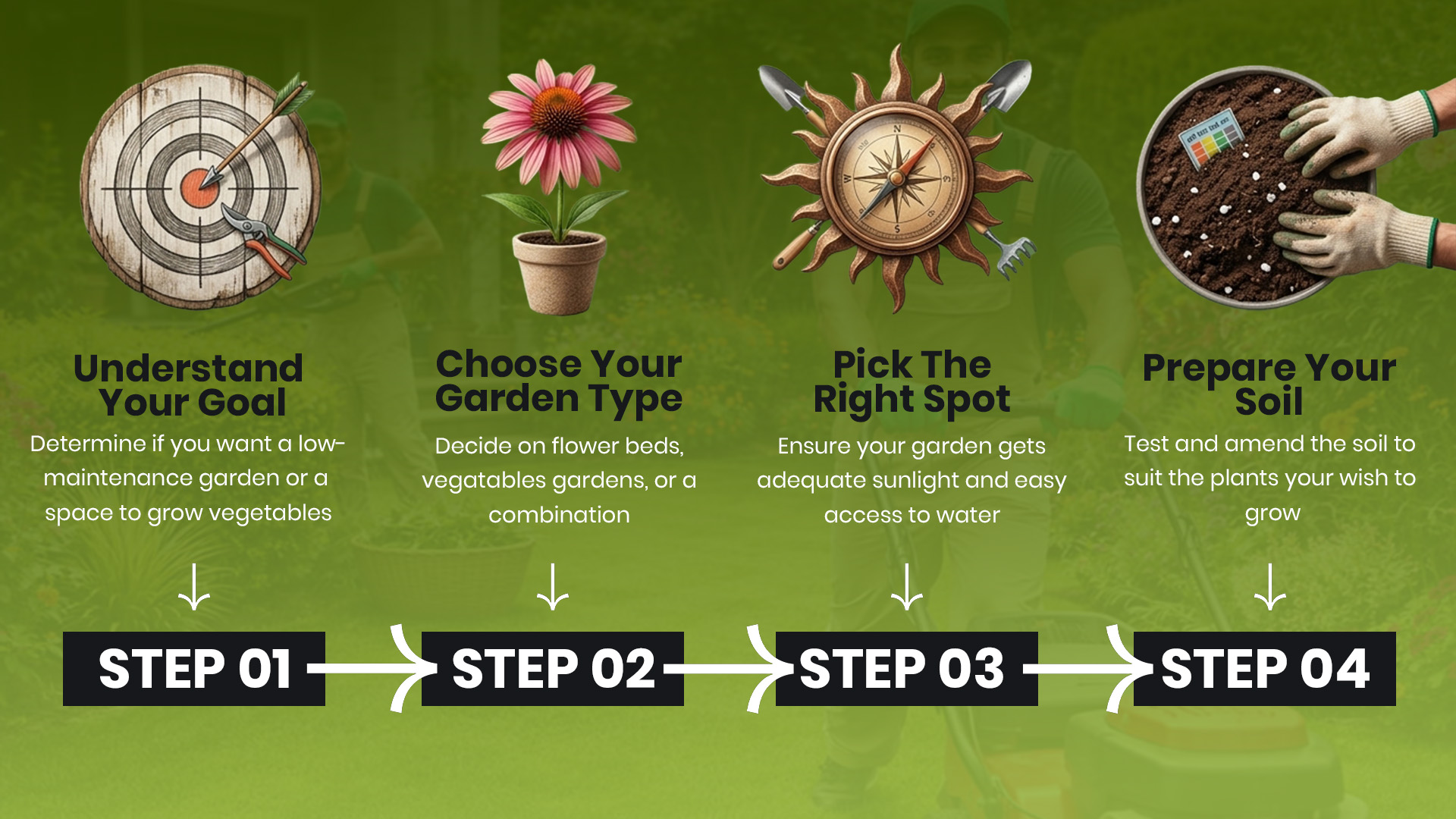
A successful outdoor project should begin with observation rather than immediate planting. Spend time understanding the site, then build the plan around its actual conditions.
For larger outdoor projects, a Saudi landscaping company can help coordinate design, planting, irrigation, and installation.
Understand Your Outdoor Space
A good garden starts with understanding the space. Check its layout, light, soil, and drainage before choosing plants or materials.
Start by measuring the area and mapping its main zones.
Check sunlight and shade patterns across the garden.
Assess the soil before choosing suitable plants.
Look for drainage issues and compacted ground.
Note existing trees, pathways, walls, fences, and paving.
Soil conditions can influence which plants grow well and how much maintenance they require.
Plan the Purpose of Your Garden
A defined goal helps you select how much room to offer different garden elements and which plants to use.
Add colorful flowers, shrubs, grasses, and feature plants to the space.
Keep lawn areas open for recreation, events, or flexible activities.
Plant herbs and vegetables in a sunny, convenient location.
Provide room for play, seating, and comfortable movement.
Choose suitable plants and simple designs to reduce maintenance, especially with small garden landscape design.
Create a Garden Budget
Knowing your expected costs makes it easier to plan the project and manage spending.
Include all planned plants in your initial budget.
Set aside money for topsoil, compost, mulch, edging, and soil add ons.
Include sprinklers, drip lines, hoses, and other watering parts.
Also budget for paths, paving, lights, benches, and other layout items.
Remember installation work, pruning, lawn upkeep, and replacing plants later on.
How to Choose the Right Plants?
A plant may look attractive but still not suit your gardening & landscaping area. Choose plants based on the conditions they will actually experience.
Look at Your Local Weather First
Pick plants that handle your usual temps, how much rain you get, humidity levels, and the shifts between seasons. Consider other conditions in your yard as well.
Sunlight Requirements
Check whether each plant needs full sun, partial shade, or shade. Put it where the plant can get enough suitable light.
Soil Type
Match plants with suitable soil characteristics. Test soil pH where needed and improve soil structure rather than forcing unsuitable plants to grow.
Plant Size and Growth
Check how large the plant can grow before planting it. Check both height and width. Also note how the roots spread. Watch the growth rate too.
Leave enough room for each plant to grow properly. Keep them from crowding walls and nearby structures.
Maintenance Needs
Consider your maintenance routine before choosing plants. This may include watering, pruning, feeding, and monitoring pests.
Native Plants for Your Climate
Check which plants grow well in your area. If it makes sense for your site, choose native plants that match the local climate. These can fit local conditions better. The right choices can also support local wildlife.
Examples such as a prior park landscape garden can also show how plants, pathways, and open areas work together.
Essential Gardening Tools for Beginners
You do not need a huge pile of gear to begin. For most garden chores, a simple starter kit works just fine. Like:
Garden fork
Hand cultivator
Pruning shears
Garden gloves
Garden rake
Watering can or hose
Wheelbarrow
Garden scissors
Kneeling pad
Measuring tape
Buckets or garden containers
Select practical tools suited to your garden size. Keep cutting tools clean and sharp for safer, cleaner work.
Basic Garden Care Tips
Your garden will not stay the same from week to week. Doing small jobs often is usually simpler than waiting until issues get big.
Watering
Check what each plant needs. Change watering needs with the soil, weather, and season. Try to water near the roots. Water the soil instead of the leaves when suitable.
Pruning
Remove dead leaves, broken stems, and unhealthy growth. Also remove shoots that you do not want. Timely pruning helps maintain plant shape and healthy growth.
Fertilizing
Feed plants only when they need it. Always use types of fertilizers recommended for the plants and use the recommended amounts. Do not add extra fertilizer to plants, thinking that it will make them grow faster.
Weed Control
Remove the weeds before they become established. Hand pulling and using mulch or ground cover are some methods of controlling weeds. Leave enough space between plants to limit future weed growth.
Mulching
Spread mulch around plants to conserve moisture and limit weeds. Organic options add nutrients as they decompose. Keep mulch slightly away from stems.
Plant Pest and Disease Care
Check your plants often. Look for odd marks on leaves, holes, bugs, leaf drop, drooping, or slow growth. Try to figure out what is wrong before you pick a spray or other treatment.
Lawn Maintenance
Keep the lawn cut at a height that fits the grass you have. Take out extra thatch only when it builds up. Pull weeds as needed. Adjust your watering routine to match the weather and soil moisture.
Common Gardening & Landscaping Mistakes to Avoid
Even a simple project can become difficult when planning starts too late. Avoid these common problems:
Ignoring plant growth and spacing.
Choosing plants for looks alone.
Overlooking sun and shade.
Planting in unsuitable soil.
Failing to plan drainage.
Overwatering the garden.
Applying unnecessary fertilizer.
Creating overcrowded planting areas.
Making pruning and mowing difficult.
Choosing unsuitable high-maintenance plants.
Placing mulch too close to stems.
Underestimating costs.
Smart Ideas for Low Maintenance Gardens
The right planning can simplify garden care while keeping your outdoor space neat and appealing.
Pick plants suited to the climate.
Match plants by water requirements.
Mulch planting beds.
Limit large lawn areas.
Choose durable landscape materials.
Install suitable irrigation.
Allow enough space for plant growth.
Improve soil with organic matter.
Make beds easy to reach.
Repeat plants for a cleaner design.
Why Choose Mahraj for Landscaping?
Mahraj Landscaping designs outdoor areas that work well and look good. We also aim to match what your local area supports. You get help with more than just plants.
We can plan the garden layout, irrigation, and other landscape details for your gardening and landscaping needs. Each part can be set up for your yard size and your day to day needs.
We think about how the space will function. We also consider upkeep and how the garden will last. The goal is a garden that is simpler to care for and that you can enjoy for a long time.
Conclusion
A good gardening & landscaping job begins by looking closely at the space. It does not stop at the build. It continues through day to day care.
Start with the basics. Your soil type is important. Light from the sun matters as well. Good drainage can decide if the plan works or fails.
Pick plants that are suited to the site conditions. Think about the watering needs before you plant. Design the space to work well, not just to be beautiful.
Set realistic goals. Consider those who have time for upkeep and don't plan for it afterwards. By planning this way, even a small garden can end up a healthful space that's functional and enjoyable.